-------------------------------------------------------

Visit amazon.com for purchasing the book..

Online Donations

Please Donate If You feel this site is good and knowledge
resource of books or literature:

https://www.akshayapatra.org/onlinedonations

You can help the site by posting and/or telling your friends+colleagues about this place :)
Before God we are all equally wise - and equally foolish-Albert Einstein
Get your own Wavy Scroller
(Knowledge is not power; the ability to use that knowledge is power )

© Copyright 2009 Scientist. All rights reserved.

Disclaimer: Scientist-At-Work does not store any files on its server. We only index and link to webpages on, and provided by, other third-party websites.

"Use your head - I did!"

Saturday, June 25, 2011

Wiley | 2010 | ISBN: 0470404124, 0470914947 | 416 pages | PDF | 2,2 MB
Now fully revised and updated—the classic book on effective R&D management
"This thoughtful and detailed work outlines what is required in order to achieve the desired end results in a networked world where teamwork and collaboration are increasingly important to globally dispersed workforces."
—John Chambers, Chairman and CEO, Cisco
Praise for the Second Edition
"This is a superbly written book and could make an excellent reference and text for related university courses."
—E. Lile Murphree, Jr., PhD, former Chairman, Department of Engineering Management, The George Washington University
"Provides a superb exposition of the role that social and psychological phenomena play in today's organizations."
—Fred E. Fiedler, Professor of Psychology Emeritus, University of Washington, Seattle
As the economy shifts from producing goods to producing information, the role of researchers in shaping the future has become immense. By taking advantage of modern technology, the highly trained and predominantly autonomous researchers from around the globe collect and share information better than ever—yet, there is still a lack of an effective centralized structure for an R&D organization manager to integrate the efforts from many disparate individuals into a unified plan.
Managing Research, Development, and Innovation, Third Edition covers the management skills and leadership theories essential to generating products and excelling in today's global economy. Topics of interest include how to design jobs, organize hierarchies, resolve conflicts, motivate employees, and create an innovative work environment. Discover how superior management skills can increase funding, generate profit, and improve the effectiveness of technologically based organizations. This new revised edition:
* Covers all aspects of the research and development process—with focus on the human management function
* Includes two new chapters covering the innovation process critical to research and development of new products and services
* Outlines the challenging issues related to diversity in science and technology organizations and provides insights as to how diversity can be used to enhance creativity
Managing Research, Development, and Innovation, Third Edition is the most complete, insightful book of its kind. Useful for professionals and graduate students alike, the text demonstrates in clear, straightforward prose how good management skills will shape the future.

DOWNLOAD LINK:


http://depositfiles.com/en/files/46ez7on8c

Thursday, June 23, 2011

Get ur personal lab on ur PC ''for free"

found this great software and i liked to share it with u this software can helps u as it helps me in my school subjects it gives u the chance to expire things with no danger i advice anyone who likes scientists experiment to try it it's free and easy you use at home.

U can downlaod it from here

Get your free copy of Yenka

At home, you can get a personal copy of Yenka free of charge.

At school, you can also use some Yenka resources free of charge.

or from
www.yenka.com

1/ Chemguide
Code:
http://www.chemguide.co.uk/
2/ Organic Chemistry On-Line Learning Center
Code:
http://www.chem.ucalgary.ca/courses/...5th/Carey.html
3/ Virtual Textbook of Organic Chemistry
Code:
http://www2.chemistry.msu.edu/facult...ro1.htm#contnt
4/ Kirk McMichael's Organic Chemistry Pages from Washington State University hosted by
California State University, Dominguez Hills
Code:
http://chemistry2.csudh.edu/rpendarvis/
5/ ChemgaPedia
Code:
http://www.chemgapedia.de/vsengine/t...vlu/index.html
6/ Chem 38/39 Home Page
Code:
http://www.personal.psu.edu/the1/home.htm
7/ AS and A2 GCE Chemistry
Code:
http://www.drbateman.net/asa2chem.htm
8/
Code:
http://iverson.cm.utexas.edu/
9/ Chemistry Web Resources Contents Page
Code:
http://www.mpcfaculty.net/ron_rinehart/default.htm
10/ Index of /itc/chemistry
Code:
http://www.columbia.edu/itc/chemistry/
11/ Department of Chemistry - University of Kentucky
Code:
http://www.chem.uky.edu/courses/
12/ Organic Chemistry Laboratory I & II - Dixie State College of Utah
Code:
http://cactus.dixie.edu/smblack/chemlabs/

 http://university.arabsbook.com/threads/87172-Some-website-about-Organic-Chemistry#ixzz1Q7WAcqnp

Saturday, June 18, 2011

Infrared and Raman Spectroscopy: Principles and Spectral Interpretation

Infrared and Raman Spectroscopy: Principles and Spectral Interpretation explains the background, core principles and tests the readers understanding of the important techniques of Infrared and Raman Spectroscopy. These techniques are used by chemists, environmental scientists, forensic scientists etc to identify unknown chemicals. In the case of an organic chemist these tools are part of an armory of techniques that enable them to conclusively prove what compound they have made, which is essential for those being used in medical applications. The book reviews basic principles, instrumentation, sampling methods, quantitative analysis, origin of group frequencies and qualitative interpretation using generalized Infrared (IR) and Raman spectra. An extensive use of graphics is used to describe the basic principles of vibrational spectroscopy and the origins of group frequencies, with over 100 fully interpreted FT-IR and FT-Raman spectra included and indexed to the relevant qualitative interpretation chapter. A final chapter with forty four unknown spectra and with a corresponding answer key is included to test the readers understanding. Tables of frequencies (peaks) for both infrared and Raman spectra are provided at key points in the book and will act as a useful reference resource for those involve interpreting spectra. This book provides a solid introduction to vibrational spectroscopy with an emphasis placed upon developing critical interpretation skills. Ideal for those using and analyzing IR and Raman spectra in their laboratories as well as those using the techniques in the field. Uniquely integrates discussion of IR and Raman spectra Theory illustrated and explained with over 100 fully interpreted high quality FT-IR and FT-Raman spectra (4 cm-1 resolution) Selected problems at the end of chapters and 44 unknown IR and Raman spectra to test readers understanding (with a corresponding answer key)

TABLE OF CONTENTS

  • Infrared and Raman Spectroscopy
  • Principles and Spectral Interpretation
  • Copyright
  • Dedication
  • Preface
  • 1 Introduction: Infrared and Raman Spectroscopy
    • 1. Historical Perspective: IR and Raman Spectroscopy
    • References
  • 2 Basic Principles
    • 1. Electromagnetic radiation
    • 2. Molecular motion/degrees of freedom
      • 2.1. Internal Degrees of Freedom
    • 3. Classical harmonic oscillator
    • 4. Quantum mechanical harmonic oscillator
    • 5. IR Absorption Process
    • 6. The Raman scattering process
    • 7. Classical description of the Raman effect
    • 8. Symmetry: IR and Raman active vibrations
    • 9. Calculating the vibrational spectra of molecules
    • References
  • 3 Instrumentation and Sampling Methods
    • 1. Instrumentation
      • 1.1. Dispersive Systems
      • 1.2. Dispersive Raman Instrumentation
      • 1.3. Sample Arrangements for Raman Spectroscopy
      • 1.4. Interferometric Spectrometers
        • 1.4.1. FT-IR Spectrometers
        • 1.4.2. FT-Raman Spectrometers
    • 2. Sampling Methods for IR Spectroscopy
      • 2.1. IR Transmitting Materials
      • 2.2. Sampling Techniques
      • 2.3. Transmission IR
        • 2.3.1. Liquids and Solutions
        • 2.3.2. Cast Films
          • 2.3.3. Solid-Powdered Samples: KBr Discs and Nujol Mulls
          • Nujol mull
          • KBr disc sample preparation
        • 2.3.4. Melts
      • 2.4. Reflection Techniques
        • 2.4.1. Attenuated Total Reflectance (ATR)
        • 2.4.2. Diffuse Reflectance
      • 2.5. Microscopy
        • 2.5. Transmission IR Microscopy
        • 2.5.2. Reflection IR Microscopy
    • 3. Quantitative Analysis
      • 3.1. Relationship of IR and Raman Signal to Analyte Concentration
      • 3.2. Quantitative Analysis: Ratio Method
        • 3.2.1. Fractional Linear Calibration Equations
      • 3.3. Example of Quantitation Using Ratio Method of Analysis
    • References
  • 4 Environmental Dependence of Vibrational Spectra
    • 1. Solid, Liquid, Gaseous States
    • 2. Hydrogen Bonding
    • 3. Fermi Resonance
    • References
  • 5 Origin of Group Frequencies
    • 1. Coupled Oscillators
      • 2. Rules of Thumb for Various Oscillator Combinations
    • References
  • 6 IR and Raman Spectra-Structure Correlations: Characteristic Group Frequencies
    • 1. X–H stretching group (X=O, S, P, N, Si, B)
    • 2. Aliphatic groups
    • 3. Conjugated aliphatics and aromatics
      • 3.1. Alkyl-Substituted Olefinic Groups
      • 3.2. Triple and Cumulated Double Bonds
      • 3.3. Aromatic Benzene Rings
        • 3.3.1.Aryl CH Wag
      • 3.4. Fused Ring Aromatics
      • 3.5. Heterocyclic Aromatic Six-Membered Ring Compounds
        • 3.5.1. Pyridines
        • 3.5.2. Triazines and Melamines
        • 3.5.3. Five–membered Ring Heterocyclic Compounds
    • 4. Carbonyl groups
      • 4.1. Review of Selected Carbonyl Species
      • 4.2. Factors that Effect Carbonyl Frequencies
    • 5. C–O and C–N Stretches
    • 6. N=O and other Nitrogen containing compounds
    • 7. C-Halogen and C–S Containing compounds
    • 8. S=O, P=O, B–O/B–N and Si–O compounds
    • 9. Inorganics
    • References
  • 7. General Outline and Strategies for IR and Raman Spectral Interpretation
    • 1. Tools of the trade
    • 2. IR Sample preparation issues
      • 2.1. Select Suitable Sampling and Know the Limitations
    • 3. Overview of spectral interpretation
      • 3.1. Hierarchy of Quality for Spectral Reference Libraries
      • 3.2. Computer-Based Libraries and Software Tools
      • 3.3. Define the Problem that Needs to be Solved
      • 3.4. Examine the IR and Raman Spectrum
    • 4. Interpretation guidelines and major spectra–structure correlations
      • 4.1. Hydroxy (OH), Amino (NH), and Acetylene (.CH) Groups: 3700–3100 cm-1
      • 4.2. Unsaturated Aryl and Olefinic Groups: 3200–2980 cm 1
      • 4.3. Aliphatic Groups: 3000–2700 cm 1
      • 4.4. Acidic Protons: 3100–2400 cm 1
      • 4.5. SH, BH, PH, and SiH: 2600–2100 cm 1
      • 4.6. Triple Bonds and Cumulated Double Bonds: 2300–1900 cm 1
      • 4.7. Carbonyl-Containing Species: 1900–1550 cm 1
      • 4.8. Olefinic (C=C), Imino (C=N), and Azo (N=N) Compounds: 1690–1400 cm 1
      • 4.9. Organic Nitrates (N=O): 1660–1450 cm–1
      • 4.10. Amine NH Deformation Vibrations for Amines, Amine Salts, and Amide Compounds: 1660–1500 cm–1
      • 4.11. Aromatic and Hetero-aromatic Rings: 1620–1420 cm–1
      • 4.12. Methyl and Methylene Deformation Vibrations: 1500–1250 cm–1
      • 4.13. Carbonate, Nitrate, Ammonium, and B–O Type Compounds: 1480–1310 cm–1
      • 4.14. Organic and Inorganic SOx Type and Thiocarbonyl (C=S) Compounds: 1400–900 cm–1
      • 4.15. P=O-Containing Compounds: 1350–1080 cm–1
      • 4.16. Fluorinated Alkane Groups: 1350–1000 cm–1
      • 4.17. C–O Stretching Vibrations: 1300–750 cm–1
      • 4.18. Si–O and P–O Containing Compounds: 1280–830 cm–1
      • 4.19. CH Wag of Olefinic and Acetylenic Compounds: 1000–600 cm–1
      • 4.20. Aromatic In-plane 2,4,6 Radial Carbon In-phase Stretch: 1290–990 cm–1
      • 4.21. Aromatic CH Wag: 900–700 cm–1
      • 4.22. Halogen-Carbon Stretch: 850–480 cm–1
      • 4.23. OH, NH, NH2 Wag: 900–500 cm–1
      • 4.24. Metal Oxides: 800–200 cm–1
  • 8 Illustrated IR and Raman Spectra Demonstrating Important Functional Groups
    • 1. Aliphatic
    • 2. C=C Double bonds
    • 3. Triple bonds
    • 4. Aromatic rings
    • 5. Ketones, esters, and anhydrides
    • 6. Amides, ureas, and related compounds
    • 7. Alcohols
    • 8. Ethers
    • 9. Amines and amine salts
    • 10. C=N Compounds
    • 11. N=O Compounds
    • 12. Azo Compound
    • 13. Boronic acid compound
    • 14. Chlorine, bromine, and fluorine compounds
    • 15. Sulfur compounds
    • 16. Phosphorus compounds
    • 17. Siloxane Compounds
    • 18. Inorganic compounds
    • 19. Polymers and biopolymers
  • 9 Unknown IR and Raman Spectra
  • IR Correlation Charts
  • Index


DOWNLOAD LINKS:

no password required
ifile.it

> archive password: ebooksclub.org
megaupload.com

> archive password: ebooksclub.org
fileserve.com

> archive password: ebooksclub.org
mediafire.com

Gallery of Best Resumes for People Without a Four-Year Degree (Gallery)  library.nu #126141

Gallery of Best Resumes for People Without a Four-Year Degree (Gallery)
By David F. Noble


  • Publisher:   JIST Works
  • Number Of Pages:   421
  • Publication Date:   2004-09-30
  • ISBN-10 / ASIN:   1593570686
  • ISBN-13 / EAN:   9781593570682
  • Binding:   Paperback


Book Description:

A showcase collection of more than 200 outstanding sample resumes and 30 cover letters representing the very best creations of professional resume writers. These one-of-a-kind, eye-catching resumes cover jobs from all occupational groups and at all levels and are targeted specifically to jobs that do not require a four-year college degree—jobs that require a high school diploma, post-secondary training, community college, or a two-year degree. Using the samples and Dr. Noble’s writing tips, readers can create their own interview-landing resumes and cover letters.

DOWNLOAD LINKS:

ifile.it

> archive password: ebooksclub.org
megaupload.com

Tuesday, June 14, 2011

What is an FDA-483?

What is an FDA-483?

FDA issues a form FDA 483 (inspectional observations) upon completion of an inspection, to notify an inspected establishment's top management of objectionable conditions relating to products and/or processes, or other violations of the Federal Food, Drug, and Cosmetic Act and related acts that were observed during the inspection. It is issued in pursuant to by Section 704(b) of the FFDCA, or "to assist firms inspected in complying with the Acts and regulations enforced by the FDA."

There is no law or regulation which says that the firm has to respond to a 483. However, every prudent firm that receives a 483 does respond to it, both orally and in writing, which has become an expectation. Once a 483 is issued, virtually every firm rebuts in writing; failure to do so will be seen as anomalous on your firm's compliance and philosophy for attaining and maintaining compliance.

The FDA 483 form includes the following preface1:"This document lists observations made by the FDA representative(s) during the inspection of your facility. They are inspectional observations; and do not represent a final agency determination regarding your compliance. If you have an objection regarding an observation, or have implemented, or plan to implement corrective action in response to an observation, you may discuss the objection or action with the FDA representative(s) during the inspection or submit this information to FDA at the address [on the form]."

Anita Richardson, Associate Director for Policy Office of Compliance and Biologics Quality, says that there are four reasons for submitting a well-reasoned, complete, and timely 483 response-it could possibly

mitigate an FDA compliance decision for further action, (eg untitled letter, warning letter), it demonstrates to the FDA (and other stakeholders) an understanding and acknowledgement of the observations, it also demonstrates a commitment to correct, ie the intent to voluntarily comply, and it establishes credibility with FDA.

Original intentions of FDA form 483

In previous days many firms, mainly food establishments, complained that FDA enforcement actions took place without warning. For this reason FDA developed several tools to inform regulated industry that it had found deficiencies and might proceed with regulatory action. The tools included the 'NAF letter' or Notice of Adverse Findings, which no longer is used, and the 483 and warning letters. At present warning letters and the 483 have taken on a whole new meaning as for many firms they are the enforcement actions2.

The profound change to 483 is its inception of Turbo EIR, which is a computer programme that provides introductory wording for FDA-483 observations. It encompasses canned 483 citations which searches through the drug GMP citations for the appropriate citation for the observed violation. For example, as per deviations pertaining, the documented written procedures applicable were not be followed, specifically the quality assurance auditing staff failed to fully follow established standard operating procedure (SOP) with regard to the auditing of personnel working in the aseptic core. The audits performed have not identified deficiencies in the systems designed to prevent microbial contamination of drug products purported to be sterile.

So the observation has the regulatory citation and the supporting part of the observation. We must concentrate on the supporting part of the observation, not the boiler plate language2.

New FDA programme—the 15 day deadline

On August 11, 2009, FDA issued a Federal Register notice1 announcing a programme to support public health protection by facilitating the timely issuance of warning letters. Under this programme, it establishes a timeframe for the submission and agency review of responses to Form FDA-483s before the agency's issuance of warning letters. The stated goal of the programme is to facilitate the agency's timely issuance of warning letters. These procedures have been prompted by the efforts of Dr Margaret A Hamburg, the new FDA Commissioner, to intensify the agency's enforcement programme. The purpose of this new initiative is to optimise resource utilisation, issue warning letters promptly, and promote prompt voluntary compliance.

Previously, after issuance of a 483, the firms used to submit a formal written response to the observations listed in the form 483; however, such responses can sometimes take many months which delays the issuance of warning letters in a timely manner. So to facilitate the timely issuance of warning letters, from September 15, 2009, FDA allows only 15 business days to respond to a 483 from the date of issuance of the 483. As stated in the following notice1:

"FDA will generally allow firms 15 business days to provide a response to FDA 483 observations. If we receive a response to FDA 483 observations within 15 business days after the FDA 483 was issued, we plan to conduct a detailed review of the response before determining whether to issue a warning letter. If we issue a warning letter after reviewing a firm's timely response, the warning letter will recognise receipt of the response and reply as to the apparent adequacy of the firm's corrective actions set forth in the response".

In a nutshell, the response to FDA 483 Observations received within 15 business days will have a detailed review and any warning letter issued will acknowledge 483 response and comment on firm's corrective actions. If FDA receives a 483 response more than 15 days after the 483 was issued, the agency will not likely delay the issuance of a warning letter in order to review the 483 response. This initiative expedites the issuance of warning letters. Only significant legal issues will be reviewed by the Chief Counsel. It will prioritise enforcement follow up after warning letter or recall, such as re-inspection or investigation. FDA will no longer issue multiple warning letters before taking enforcement action. Immediate action will be considered for egregious violations. FDA will conduct an assessment of this programme after 18 months, and will then decide whether to implement it permanently.

Responding to form 483

If your firm has just been issued a 483, your response has to provide accurate information and be clear and concise. As stated by John Godshalk, Senior Consultant, Biologics Consulting Group4, to write an effective response, you need to understand each observation. At the inspection close-out, make sure you understand each observation, the thinking or rationale behind it and what the FDA inspector/investigator wants the firm to do. Some observations are poorly written; it is up to you to understand what the FDA inspector wants if the observation is unclear.

As noted in - IOM 5.2.3 "Industry may use this opportunity to ask questions about the observations, request clarification, and inform the inspection team what corrections have been or will be made…" You need to understand significance of observations relating to product quality before planning and proposing an effective corrective action.

The basic response to any inspectional observation should firstly be in bold letters so it is easy to read, and should contain the reiteration of the observation (the citation), and the corrective action or CAPA, what the firm will do about the observation to fix the problem or address it to correct the non-compliance, the due date, and when the correction will be in-place. In the first paragraph of the response letter, provide a statement that your establishment understands the need to comply with FDA regulations. If your intent is to follow the law and create a good working relationship with FDA, it is vital that the promised corrective and preventive action is performed in a timely manner3. So a commitment/statement from senior leadership must be included. The cover letter must be signed by a very senior manager or high level VP of quality with brief opening stating commitment to compliance and offering to meet or confer by phone if necessary to clarify response. Consider requesting disclosure of the response if the 483 is disclosed under FOIA.

Each observation should be addressed individually and separately, and the response should be well organised and factually correct. It must not contain speculation or unsupported assertions. The responses are backed up with feasible and reasonable documentation, but does not 'overkill' by supplying too much detail. All the corrective plans proposed should have target completion date in the response. Where necessary, include interim controls until full correction is achieved. The corrective response must be communicated to FDA in a prudent manner and must be specific (eg observation-by-observation). The scope of CAPA plan with the root cause must be defined and method of verification and/or monitoring for corrections is provided. Lastly the CAPA plan must be realistic and must be able to deliver what you promise. The list of affected products should also be addressed and an assessment of product impact must be included.

Pitfalls-things NOT to say

David L Chesney, Vice President, PAREXEL Consulting, says that a 483 response should never include statements like--"The investigator was out to get us", "We have been inspected many times and this never came up before" (FDA response--'Gee, too bad we missed it all those times…good thing we saw it this time), "Everyone in our industry does this in this way" (FDA response--'Thanks for alerting us that this is an industry wide problem! We will follow that up), "We are a small business trying to survive" (FDA response — 'So, because you are small, we should allow you to operate out of compliance? Is that your point?'), or "The investigator does not know our industry", and so on.

You need to ask yourself if the observations are factually accurate, and whether we agree that they represent objectionable conditions or practices. The investigator's background and knowledge do not matter if the answer to these questions is "yes"! Saying that you are taking this up with your elected representatives is your right, and it is up to you if you want to do that, but saying that in the letter will not make your response to the 483 more effective.

As said by Mark Lynch, Senior Compliance Consultant for KMI-Parexel, Rockville, it is common for drug, device and biologics manufacturers to get slapped with a warning letter for failing to adequately address the 483. As many as 75 percent of warning letters may have been triggered by the fact that companies drawing 483s after GMP inspections did not adequately respond to the FDA investigator's observations. Lastly, it's not just putting a bandage on a leaking tank, but to figure out why all the tanks leak and show FDA how you are going to prevent that from happening again.

References:
1) Fed Register Vol. 74, No. 153, Aug. 11,2009, p. 40211, FDA-2009-N-0335
2) The FDA 483 by Carl Anderson, Immel Report™, Special Reprint, 2007
3) Response to the FDA 483 by Mary Ann Tourault, CITINGS®, April 2002
4) Presentation; Best Practices: Responding to FDA Form 483's, by John R Godshalk
5) Presentation; Writing An Effective 483 Response by Anita Richardson at 5th Annual FDA and the Changing Paradigm for HCT/P Regulation
University of Rhode Island and Pharma Conference Las Vegas, 2009.
6) Presentation; Responding to FDA-483 Observations by David L. Chesney, PAREXEL Consulting at AOAC Southern California Section Meeting, 2008

FDA Warns Dr. Reddy Over Bad Ingredients In US

Yet another instance in which the supply chain causes concern. This time around, Dr. Reddy’s Laboratories, one of the largest drugmakers in India, was tagged by the FDA for failing to properly validate methods for testing active pharmaceutical ingredients at a plant in Mexico. And this is a problem because adulterated ingredients are now circulating around the US.

The issue arose last November, when FDA inspectors visited the Dr. Reddy’s facility in Mexico and found several “significant deviations” from good manufacturing practice. The drugmaker responded the following month but, in a June 3 warning letter, the agency makes clear that Dr. Reddy’s may have completed some validations, but then there is the matter of APIs already on the market.

The letter notes that two-third of 106 APIs made in the Mexico facility are listed in drug compendia, but there was no method validation for the remainder. Even though the validations were supposed to have been completed this past April, “this does not address product currently on the market, or product that will enter the market tested with an unvalidated method.”

The FDA also takes Dr. Reddy’s to task for proposing to verify “key parameters” for the first API batch produced, but the agency maintains this approach does not provide “the same level of assurance as method validation.” And so the FDA wants the drugmaker to ensure how adulterated APIs will not reach the US market and sort out what to do with adulterated APIs that are already circulating.

Monday, June 13, 2011

Guide to Microbiological Control in Pharmaceuticals and Medical Devices

Guide to Microbiological Control in Pharmaceuticals and Medical Devices, Second Edition By Stephen P. Denyer, Rosamund M. Baird Publisher: CRC Number Of Pages: 504 Publication Date: 2006-12-26 ISBN-10 / ASIN: 0748406158 ISBN-13 / EAN: 9780748406159 Binding: Hardcover Microbiological matters continue to exercise considerable influence on product quality. In both the pharmaceutical and medical device industries, products of greater sophistication, along with evolving regulatory requirements, are elevating the challenges related to maintaining microbiological integrity. Updated to reflect technological and regulatory changes, the Guide to Microbiological Control in Pharmaceuticals and Medical Devices, Second Edition covers thoseprincipal aspects of microbiology that arerelevant to the preformulation, formulation, manufacturing, and license application stages involved with the production of pharmaceuticals and medical devices. In recognition of the diverse disciplines involved in pharmaceutical and medical device production, this work provides a brief introduction to microbiology geared towards the nonmicrobiologist. Covering good manufacturing practice in the control of contamination, the text explores quality control, the preservation of formulations, and principles of sterilization, including microbiological-specific considerations for biotechnological products and other medical devices. It also provides additional materials on package integrity and contamination risks in clean rooms. The editors have produced a companion text, the Handbook of Microbiological Quality Control in Pharmaceuticals and Medical Devices (see reverse), which when paired with the Guide offers a complete theoretical and practical treatment of microbiological control. This book provides a comprehensive distillation of information concerning methodology and regulations that would otherwise remain scattered throughout the literature. It allows scientists from many fields to address potential problems in advance and implement suitable strategies at the earliest stages of development.
Download Link 1
Download Link 2 

Review

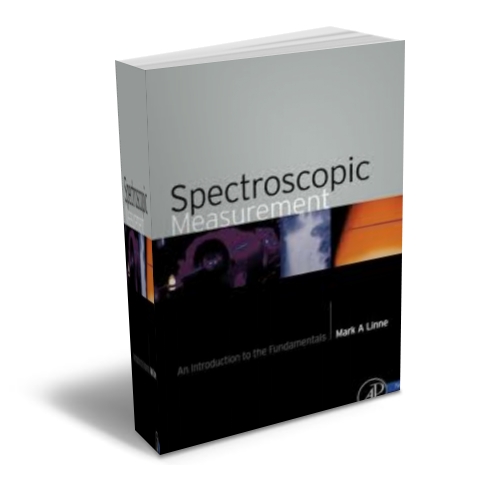
"Spectroscopic Measurements: An Introduction to the Fundamentals by Mark A. Linne is the place where you find - and understand - key ingredients of modern combustion diagnostics. For many applications, optical diagnostics play an increasingly important role. However, only the most basic descriptions of the underlying physics are often found in journal articles or textbooks, providing little guidance to the graduate student or the combustion engineer who may wish to familiarize himself or herself with the quantitative aspects and procedures. For this purpose, Linne's book is a top address to review physical principles and necessary equations in a concise and well-organized form. I have used material from this book in an advanced spectroscopy class and found it a valuable complement to textbooks on spectroscopy and reviews on combustion diagnostics.
If you are the one to actually perform and evaluate a diagnostics experiment in a complex system like a combustion device, you will appreciate this book as a condensed reference for the related physics machinery - a first-of-its-kind document which guides you through the necessary steps and which spares you to convert formalisms from many different sources."
Katharina Kohse-Höinghaus, Professor of Physical Chemistry, Bielefeld University, Germany

Book Description

Spectroscopic Measurement- An Introduction to the Fundamentals

See all Editorial Reviews


Product Details

  • Hardcover: 268 pages
  • Publisher: Academic Press; 1 edition (September 10, 2002)
  • Language: English
  • ISBN-10: 012451071X
  • ISBN-13: 978-0124510715

Download Link

Download Link

Review

From reviews to the project proposal: "... The author list is excellent. Essentially all of them are respected academics or industrialists. Probably the best I have ever seen in this area ..." (University of Amherst, Massachussetts, USA) "... There is great need of design knowledge on reactive distillation. The proposed book covers most of the important aspects. They have not been collected and presented in a coherent form earlier. Designers and industrial operators would find it valuable, also it might be used in education. The authors are very qualified..." (Helsinki University of Technology, Finland) "... Professor Sundmacher is known worldwide and respected because of his fundamental research and a lot of publications on this topic. The reputation of the editor is excellent ..." (SASOL Germany GmbH, Germany)

Product Description

In a reactive distillation column, both the chemical conversion and the distillative separation of the product mixture are carried out simultaneously. Through this integrative strategy, chemical equilibrium limitations can be overcome, higher selectivities can be achieved and heat of reaction can be directly used for distillation. Increased process efficiency and reduction of investments and operational costs are the direct results of this approach.
Highly renowned international experts from both industry and academia review the state-of-the-art and the future directions in application, design, analysis and control of Reactive Distillation processes. Part I surveys various industrial applications and covers both established large scale processes as well as new chemical reaction schemes with high future potential. Part II provides the vital details for analysis of reactive phase equilibria, and discusses the importance of chemical reaction kinetics, while Part III focuses on identifying feasible column configurations and designing their internal structure. Analysis and control of the complex dynamic and steady-state behavior of reactive distillation processes are described in Part IV.
Reactive Distillation - a very promising alternative to conventional reaction-distillation flow schemes.

See all Editorial Reviews


Product Details

  • Hardcover: 308 pages
  • Publisher: Wiley-VCH (March 10, 2003)
  • Language: English
  • ISBN-10: 3527305793
  • ISBN-13: 978-3527305797

Download Link

Product Description

Vault brings its famed journalistic, insider approach to internet industry employers. The Guide provides business profiles, hiring and workplace culture information on top employers, including Abbott Laboratories, AstraZeneca, Aventis, Bayer, Bristol-Myers Squibb, Eli Lilly, Genzyme, GlaxoSmithKline, McKesson, Merck, Pfizer, Roche, Sanofi-Syntelabo, Schering-Plough, and more. internet industry employers. The Guide provides business profiles, hiring and workplace culture information on top employers, including Abbott Laboratories, AstraZeneca, Aventis, Bayer, Bristol-Myers Squibb, Eli Lilly, Genzyme, GlaxoSmithKline, McKesson, Merck, Pfizer, Roche, Sanofi-Syntelabo, Schering-Plough, and more.

Product Details

  • Paperback: 176 pages
  • Publisher: Vault, Inc. (May 25, 2006)
  • Language: English
  • ISBN-10: 1581313896
  • ISBN-13: 978-1581313895

Sunday, June 12, 2011

The Pharmacopoeia of the United States of America: Facsimile of the First Edition (1820) (Rare Collection)

The Pharmacopoeia of the United States of America
American Institute of History of Pharmacy | January 2005 | ISBN-10: 0931292417 | 272 pages | PDF | 6.4 MB

The Pharmacopoeia of the United States of America: Facsimile of the First Edition (1820)
American Institute of the History of Pha (Other Contributor)

DOWNLOAD
DEPOSITFILES
HOTFILE
Filesonic

Share


Kristi Lew, "Chemical Reactions (Essential Chemistry)"
Chelsea House Publications | 2008 | ISBN: 0791095312 | 114 pages | PDF | 3 MB
Fireworks light up the summer night sky with their colorful displays, forensic experts use DNA to help solve crimes, and deep-sea creatures illuminate the depths of the ocean in search of their next meal. All these things happen because of chemical reactions, but what exactly is a chemical reaction? Filled with intriguing full-color photographs, insightful sidebars, and other essential features, this insightful new book helps students fully understand how chemical reactions happen - covering atomic structure, chemical bonding, reaction rates, and more.
DOWNLOAD FROM:-LINK 1

Guidance from different agencies(Source:(cGALP))

Guidance document on part 11-Electronic signature & Electronic record & Computer System Validation(CSV)

FDA guidance - General principles of software validation

Computer System Validation(CSV)

21 CFR Part 11 -FDA

spreadsheetvalidation.pdf

NEW: Validation of Computerised Systems - Core Document

NEW: Annex 1: Validation of computerised calculation systems: example of validation of in-house software - Spread sheet/Microsoft Excel

NEW: Annex 2: Validation of Databases (DB), Laboratory Information Management Systems (LIMS) and Electronic Laboratory Notebooks (ELN)

NEW: Annex 3: Validation of computers as part of test equipment

GAMP 4 to GAMP 5 –Summary

Stability study

The purpose of stability testing is to provide evidence on how the quality of a drug substance or drug product varies with time under the influence of a variety of environmental factors such as temperature, humidity, and light, and to establish a re-test period for the drug substance or a shelf life for the drug product and recommended storage conditions. Stability testing is a routine procedure performed on drug substances and products. It is involved at various stages of product development.

In early stages, accelerated stability testing (at relatively high temperatures and/or humidities) can be used as a “worst case” evaluation to determine what types of degradation products may be found after long-term storage.

Testing under more gentle conditions (those recommended for long-term shelf storage), and slightly elevated temperatures, can be used to determine a product’s shelf life and expiration dates.

In these types of studies, the product is analyzed at regular intervals for various parameters, which may include assay of the active ingredient, measurement of known degradation products, dissolution time, appearance, etc.


Stability Guidelines

ICH

Quality Guidelines : (Stability)

Q1A(R2): Stability Testing of New Drug Substances and Products

Q1B: Photostability Testing of New Drug Substances and Products

Q1C: Stability Testing for New Dosage Forms

Q1D: Bracketing & Matrixing Designs for Stability Testing of Drug Substances & Drug Products

Q1E: Evaluation of Stability Data

Q1F: Stability Data Package for Registration Applications in Climatic Zones III and IV - This Guideline withdrawn on June 8, 2006


WHO

Guidelines for stability testing of pharmaceutical products containing well established drug substances in conventional dosage forms Annex 5, WHO Technical Report Series 863, 1996
MORE

Item 10.1 TRS 937:
Item 10.1, WHO Technical Report Series 937, 2006
MORE

Update, Item 11.1 TRS 908
Item 11.1, WHO Technical Report Series 908, 2003
MORE

Stability testing of active pharmaceuticals ingredients and finished pharmaceuticals products - Annex 2

WHO Technical Report Series 953, 2009

MORE

Consultation of Stability studies in a global environment
MORE


USFDA

Guidance for industry


EMEA

Stability testing of new drug substances and products

MORE


TGA

Australian Regulatory Guidelines for Complementary Medicines(ARGCM)

More

TGA : Questions & answers on the stability testing of Listed complementary medicines

Read More


ASEAN

Stability study of drug product

Read More


GCC

Stability testing of drug substances and pharmaceutical products

Read More


Decision Tree for Data Evaluation for Retest Period or Shelf Life Estimation for Drug Substances or Products (excluding Frozen Products)

Case 1 : No significant change in accelerated

a) No or little change in long term and accelerated

Extrapolation (Y) = up to 2X, but not exceeding X + 12 months;

or if refrigerated, Y = up to 1.5X, but not exceeding X + 6 months

b) Change in in long term & acclerated

i)If backed by statistical analysis and relevant supporting data;

Extrapolation (Y) = up to 2X, but not exceeding X + 12 months;

or if refrigerated, Y = up to 1.5X, but not exceeding X + 6 months

ii)If backed by relevant supporting data;

Extrapolation (Y) = up to 1.5X, but not exceeding X + 6 months;

or if refrigerated, Y = up to X + 3 months

Case 2 : Significant change within 6 month accelerated

a) if refrigerated, and significant change within 3 months - No extrapolation

b) if refrigerated, and no significant change within 3 months- No extrapolation

c) if not refrigerated and significant change at intermediate - No extrapolation

d) if not refrigerated and no significant change at intermediate condition

i) If backed by relevant supporting data:Y = up to X + 3 months

ii) If backed by statistical analysis and relevant supporting data

Y = up to 1.5X, but not exceeding X + 6 months


Note:

"Significant change" for a drug substance is defined as failure to meet its specification

In general, "significant change" for a drug product is defined as:

1. A 5% change in assay from its initial value; or failure to meet the acceptance criteria for potency when using biological or immunological procedures;

2. Any degradation product’s exceeding its acceptance criterion;

3. Failure to meet the acceptance criteria for appearance, physical attributes, and functionality test (e.g., color, phase separation, resuspendibility, caking, hardness, dose delivery per actuation); however, some changes in physical attributes (e.g., softening of suppositories, melting of creams) may be expected under accelerated conditions; and, as appropriate for the dosage form:

4. Failure to meet the acceptance criterion for pH; or

5. Failure to meet the acceptance criteria for dissolution for 12 dosage units.

FIP Position Paper on Qualification of Paddle and Basket Dissolution Apparatus -To read click the link FIP Position paper dissolution


FDA publishes guidance document on capillary Electrophoresis

The ICH Steering Committee recommends that the analytical procedures described in the official pharmacopoeial texts, Ph. Eur. 2.2.47. Capillary Electrophoresis, JP General Information. Capillary Electrophoresis, and USP General Information Chapter <1053> Biotechnology-derived Articles – Capillary Electrophoresis, can be used as interchangeable in the ICH regions. To view the guidance, CE FDA Guidance


Uncertainty of Measurement-Part 1: General OMCL Policy for implementation of Measurement of Uncertainty in Compliance Testing

Uncertainty of Measurement-Part 2: OMCL Policy on the Estimation and Application of Uncertainty in Analytical Measurement

Implementation of ISO/ISE 17025 by Agilent technoligies

To get the copy of Analytical instrument qualification from Agilent technologies click the link - Analytical Instrument Qualification


Guidance for UK Manufacturer’s Licence and Manufacturer’s Authorisation (for Investigational Medicinal Products) Holders on the use of UK Stand Alone Contract Laboratories

This document:

• Defines a stand alone contract laboratory in relation to quality control testing of medicinal products.

• Provides guidance as to when a contract laboratory must be named on a manufacturer’s licence for relevant medicinal products for human and veterinary use and/or a manufacturer’s authorisation for investigational medicinal products.

• Is applicable to all manufacturing licence holders, i.e. import, export, herbals and specials.

• Provides guidance as to when a contract laboratory is not required to be named on a manufacturer’s licence or authorisation.

• Outlines the MHRA’s criteria for inspection of contract laboratories.

This guidance can be downloaded by clicking Guidance .


A primer for Good laboratory Practice and Good Manufacturing Practice - For Analytical Laboratories

WHO good practice for pharmaceuticals quality control laboratory(draft)

Analytical Balance

NIST - weight and measurement-calibration procedure

NIST - Weight classification

Balance calibration procedure

A guide for Proper weighing of lab balance by Mettler


HPLC Column comparison

To find out alternative column for your column of interest.

HPLC Column comparison - USP Database

HPLC Troubleshooting guide

From waters

From sigma-aldrich


Instrument calibration

1. Disolution Apparatus 1 & 2 - Mechanical calibration

Procedure - FDA procedure - Dissolution - Mechanical calibration

Calibration of Dissolution Apparatus 1&2

Recently FDA has released a new guidance on Calibration of disolution apparatus 1 & 2. This guidance document more emphasis on enhanced mechanical calibration than chemical performance verification test. This guidance also recommends to manufacturer take appropriate control to handle recognised source of significant variablity during dissolution testing like dissolved gases, vibration and vessel dimensions. For more information go through the link .Guidance to industry -Dissolution


Dissolution procedure toolkit

USP released the version 2 of dissolution tool kit procedure for mechanical calibration and performance verification test apparatus 1 & 2. The dissolution toolkit provides a description of best practices associated with the mechanical calibration and performance verification test for the USP basket and paddle dissolution apparatuses and test assemblies.This second version of the dissolution toolkit represents a continuing effort to provide detailed information describing the procedures that if used will assure a properly qualified dissolution test assembly. For more information click Disolution Toolkit Procedure Version-2.

To refer version-1 click Dissolution Toolkit version-1

Further USP established a new acceptance criteria for current lot of Prednisone tablet. For more information click the link Performance of Equipment to Test Dissolution of Medications Further Assured

2. Prednisone tablet for PVT - New lot - P1I303

Prednisone Tablet for PVT - New lot released on March 2010

Prednisone Tablet for PVT - A new lot is released on March 01, 2010 Lot No.P1I300 valid through Feb 29, 2012 with test procedure an optional two stage test and calculation example. On April 30, 2010, Lot P0E203 will no longer be official.

Note: There was an error in the initial USP certificate dated Feb.22, 2010. It is now corrected. For corrected certificate click Prednisone Tablet for PVT - New lot released on March 2010.


Instrument Qualification

Qualification of Equipment (Core document)

Annex 1: Qualification of HPLC Equipment

Annex 2: Qualification of GC Equipment

Annex 3: Qualification of UV-Visible Spectrophotometers

Annex 4: Qualification of IR Spectrophotometers

Annex 5: Qualification of Automatic Titrators

NEW: Annex 6: Qualification of piston pipettes


Result & Reports

Evaluation & Reporting of Results


Concept paper on Storage Conditions during Transport

This paper is concerned with challenges related to the maintenance of appropriate transit conditions during transport as products move through all stages of the manufacturing and wholesale distribution system from active substance through the wholesale distribution system to ensure that patients and animals receive safe and efficacious medicinal products.

From a product’s perspective, transport is a mobile form of storage but where there are weaker controls than storage in fixed sites – therefore similar levels of controls should exist. Compliance at all stages of manufacture and distribution becomes more important as the number of transport stages increase, including transport (i.e. import) into the EU. Several examples have been seen where sea-freight significantly exceeds 30 days. Any increases in the length of time and/or the climactic challenge at each stage will also impact on compliance. It is also increasingly difficult to be aware of and to assess the cumulative effects of adverse incidents at different stages.

Many sites of manufacture are now located in tropical zones and/or where transport infrastructure may be difficult. Therefore the challenges arising from transport between such sites and from these sites to the EU may take finished products, or their earlier stages of manufacture, outside of the conditions defined in the EU Marketing Authorisation for storage of the product. Also, the risk of freezing during transport and the effects on the products should be considered.

It is important to understand the susceptibility of different products at the different stages and whilst the principles of quality risk management would be applied on a product by product basis at each stage of manufacture and transport would be expected, the reality is that different products and different product stages are frequently co-shipped. It is therefore evident that a simple set of readily understood general rules should apply to transit conditions to reduce this complexity and risk of error.

Although widely acknowledged, there is no explicit requirement for the need to conduct transport studies under worst case conditions and no requirement for routine monitoring during transport.


Primer for GLP & GMP for Analytical Lab - Agilent


Top ten deficiencies found during first assessment of new applications from October to December 2009 - EDQM

This document is a summary of the main questions resulting from the first assessment of new applications for Certificates of Suitability (CEP) for chemical purity. It is based on the content of 108 deficiency letters sent to the applicants on applications treated from October to December 2009.

The Top 10 questions are listed below with additional recommendations regarding EDQM requirements added. By including these recommendations - together with the requirements described in the EDQM Guideline "Content of the dossier for chemical purity" PA/PH/CEP (04) 1 (current version) which is available on our website - applicants can improve the quality of their dossiers with a view to facilitating and speeding up the granting of their CEP.

TOP 1 (3.2.S.2.2) / (3.2.S.2.3): Redefinition of starting material

TOP 2 (3.2.S.2.3): Absence of discussion on the carry-over of impurities/by-products from key materials

TOP 3 (3.2.S.2.3): Absence of discussion for Class 1 solvent as contaminant of another solvent

TOP 4 (3.2.S.3.2): Genotoxic impurities

TOP 5 (3.2.S.4.4): Absence of comparison of the quality of the final substance obtained with starting materials from different suppliers

TOP 6 (3.2.S.2.3): Incomplete specifications for the declared starting materials

TOP 7 (3.2.S.4.3): Suitability of the monograph to control the impurity profile of the final substance

TOP 8 (3.2.S.6): Specification for container closure system

TOP 9 (3.2.S.3.2): Compliance with the requirements of the Ph. Eur General Monograph 2034: limit for unspecified impurities

TOP 10 (3.2.S.2.3): Solvent recovery

For more information click the weblink

http://www.edqm.eu/medias/fichiers/PAPHCEP_10_65_Top_Ten_Deficiencies_New_Application.pdf


How to do document - New revised APIC guide - GMP for API

It describes the intrepretation of ICH Q7 with revision in quality management, personnel & agents,brokers,traders,distributors,repackers and relabellers - Version 6.

How to do document-Intrepretation of ICH Q7 -Verison 6 -Revised


Example of Quality Risk Management (QRM) Implementation by PIC/S

An informal working group within PIC/S has developed an example of methodology for the implementation of Quality Risk Management (QRM) in industry. For download example


EU GMP Guide chapter-7 revised - Outsourced activities -contract manufacturer and analysis

Chapter 7 of the EU GMP Guide "Contract Manufacture and Analysis" has been revised and was published on the GMP-information site of the European Commission on 9 November 2010.

Reasons for changes: in view of the ICH Q10 guideline on the Pharmaceutical Quality System, Chapter 7 of the GMP Guide has been revised in order to provide updated guidance on outsourced GMP regulated activities beyond the current scope of contract manufacture and analysis operations. The title of the Chapter has been changed to reflect this.


WHO guideline on Quality Risk Management

This guideline will align with the general framework described within other current international papers on this subject.

Principles of quality risk management- Four primary principles of QRM are:

•the evaluation of the risk to quality should be based on scientific knowledge and
ultimately link to the protection of the patient;
• QRM should be dynamic, iterative and responsive to change;
• the level of effort, formality and documentation of the QRM process should be
commensurate with the level of risk; and
• the capability for continual improvement and enhancement should be embedded in the QRM process.


Change in ICH classification of residual solvent - Cumene(Isopropyl Benzene) - From class 3 to class 2

Cumene is listed in the ICH Q3C(R4) guideline in class 3. A revision to the ICH Q3C(R4) guideline is proposed in which it is recommended that cumene be placed into class 2 to take account of new toxicity data.

To go through draft guideline and send comment click Draft guideline


Out-Of-Specification (OOS)

Investigation is must for any product failures to find out the root cause and Corrective And Preventive Action(CAPA). USFDA come up with definite guidance on this subject. This guideline helps to handle OOS data and procedure for investigation. For more information refer the below link. FDA Guidance - OOS


Out-Of-Trend(OOT) Analytical Results

OOT means an analytical result which fall with in the specification limit but does not follow with in the trend or unexpected result. Normally any analytical result which fall in Out-Of-Specification requires a detailed investigation to find a root cause failure and folowed by a currettive And Preventive Action(CAPA).

Though regulation demands investigation to be completed with in thirty days but most of the cases industries fails to complete the investigation with in stipulated period to find root cause. Meanwhile its end up with few more failures. To avoid such things happen the current practice starts investigation when results appear to be out-of-trend.

The following links help to know more about OOT

Identification of OOT-Stability results

Identification of OOT-Stability results-part-2


Revised Annex 13 on Investigational Medicinal Products (IMP) coming into operation
The European Commission has published on the EudraLex - Volume 4 webpage the new Annex 13 (Investigational Medicinal Products) of the EU Guidelines to Good Manufacturing Practice. The new Annex is coming into force in July 2010.

http://ec.europa.eu/health/documents/eudralex/vol-4/index_en.htm

Part 2 EU GMP Guide on APIs Will No Longer Be Identical to ICH Q7
The European Commission published a revised Part 2 text on GMP for APIs which will enter into force by 31 July 2010.

http://ec.europa.eu/health/files/eudralex/vol-4/2007_09_gmp_part2_en.pdf


A template for API quality agreement

This Quality Agreement template was developed by the Bulk Pharmaceutical Task Force (BPTF), an affiliate organization of the Society of Chemical Manufacturers and Affiliates (SOCMA), as a guide for drafting a Quality Agreement relating to the manufacture and release of substances regulated by the Food and Drug Administration. The template is based on the collective experience of industry members. This can be downloaded by clicking Quality agreement template


WHO released draft guidance for production and control of specified starting material

Specified starting material means any substance which is primarily or mainly used as a starting material for the production of an API, but which could be used directly as an API.

This guideline is intended to assist applicants or MA holders in assessing the required level of quality of “specified starting materials” that will be used for the manufacture of an API. It is also intended to help API master file holders (APIMF) in the compilation of their APIMFs

The control of the “specified starting materials” should be designed to detect isomeric or other impurities which are potentially reactive and could be carried through to the final product of the synthesis.

For more information click WHO guideline

Verification of Compendial Procedures - Changes Planned in the USP General Chapter <1226> -USP 35

In the Pharmacopeial Forum from November/December 2010, the USP proposed to revise the General Chapter <1226> Verification of Compendial Methods.

Changes planned are as below. USP planning to implement in USP 35.

  • The word "method" should be replaced by "procedure"

  • Aims to clarify the purpose and the scope of the verification process. "The verification process for compendial test procedures is the assessment of whether the procedure can be used for its intended purpose, under the actual conditions of use for a specified drug substance and/or drug product matrix."

  • "The process of assessing the suitability of a compendial analytical test procedure under the conditions of actual use may or may not require actual laboratory performance of each analytical performance characteristic."

The following will be added to the points which must be taken into consideration for the Verification of Compendial Procedures:

  • drug substance's synthetic route

  • method of manufacture for the drug product

  • effect of the matrix on the recovery of impurities

  • suitability of chromatographic conditions and column

  • appropriateness of detector signal response

The revision of the General Chapter <1226> Verification of Compendial Procedures should be published in the USP 35.

Clarification not provided by USP is "Whether the laboratory needs to prove the performance of each validation parameter for the assessment is left open".


Analytical Method Development

HPLC method development guide

Selecting right chiral column

GC column selection guide

Analytical Method Validation

Primer for validation of analytical method - Agilent technoligies

Validated analytical method only can give accurate results. Validation of analytical method is must for pharmaceutical analytical laboratory.

There is guideline for analytical method validation from ICH & US FDA.

ICH-Q2(R1)- Validation of Analytical Procedures - Text and Methodology

http://www.ich.org/LOB/media/MEDIA417.pdf

US FDA draft guidance on analytical procedures & method validation

FDA-Analytical method validation

EDQM guideline

EDQM-Validation of analytical procedure

Method validation - Particle size - Laser diffraction - Malvern application note New

Analytical Method Transfer

There is no definite guidance from USFDA on this subject. Recently USP has come up with a stimuli article on this subject. For more information refer the link below.

Transfer of analytical procedures-A new general information chapter

http://www.usp.org/pdf/EN/USPNF/PF35(5)_StimArticle-2.pdf

WHO draft guideline - Refer page 14

An article on analytical method transfer

Challenges in analytical method transfer

Auditing pharmaceuticals quality control Laboratory

Auditing quality control laboratory is must for continuous improvement and regualotory requirements. It helps to keep QC laboratory in high compliance level and maintain best practices through continuos improvement by training and gap analysis.

There is a guideline from US FDA for inspection pharmaceuticals QC laboratory it includes chemical lab and Micro lab.

Pharmaceutical Quality Control Labs

Guide to inspection of pharmaceuticals quality control laboratory

Audit check list for Pharmaceutical Quality Control Labs by PICScheme

inspection-of-quality-control-laboratories.pdf

Microbiological Pharmaceutical Quality Control Labs

Guide to inspection of microbiological pharamaceuticals quality control lab

  • NEW: Standard ‘Aide-Mémoire’ for the Mutual Joint Audit of Official Medicines Control Laboratories*


    GMP-Common Deficiencies-MHRA

    Auditing Guide from APIC


    World Health Organization Public Inspection Reports (WHOPIR)

    The World Health Organization Public Inspection Reports (WHOPIR) is a summary of the inspection report of

    • a manufacturing site for Active Pharmaceutical Ingredients (APIs);

    • a manufacturing site for Finished Products (FPs);

    • an organization such as a Contract Research Organization where a bioequivalence study or other clinical study had been performed (CROs);

    • a quality control laboratory

    The WHOPIR reflects the inspection report and gives a summary of the observations and findings made during the inspection, but excludes confidential proprietary information. It indicates also the date and duration of the inspection as well as the scope of the inspection.

    The reported inspection reports are from India & china companies. Few examples are Ranbaxy, Cipla, Matrix, Lupin, IPCA, Aurobindo, Sitec lab,Vimta lab etc

    To view/read the WHO inspection report click WHO inspection reports

    Microbiology

    Harmonization of microbial limit test - pharmtech

    Objectionable microorganism Vs Specified microorganism

    How to Determine if an Organism is “Objectionable”

    Presentation - USP -Micro

    Presentation - USFDA -Micro

  • USP revised the general chapter <85> Bacterial Endotoxins Test

  • Portable PatentHunter(Repost)

    Portable PatentHunter 3.5.16 | 17 Mb

    PatentHunter is a software program that helps patent attorneys, businesses and inventors search, download and manage United States and foreign patents. Unlike commercial providers who can charge $3 to $5 per patent, downloading patents with PatentHunter is FREE because PatentHunter searches patents and downloads complete patent images from the USPTO and EPO websites. PatentHunter was created by a U.S. Patent Attorney, Michael S. Neustel of Neustel Law Offices, LTD.

    The portable app does not require installation. Make as many copies as you need. Carry it in a flash drive and use on any computer, even without administrator access. No change of any setting on the host computer. No more conflicts with other applications. No more 'hijacking' of file types.

    Download and extract using 7-zip

    Downloa

    Statgraphics

    STATGRAPHICS Centurion 16.1 | 54 Mb

    STATGRAPHICS Centurion is designed for anyone who wishes to do serious data analysis without investing weeks learning how to use a statistical package. It contains over 170 statistical procedures, covering everything from summary statistics to design of experiments. Yet you don't need to be a statistician to use the program. Everything is completely menu-driven, and there are tools such as the StatWizard and StatAdvisor to help you use the program most effectively.
    STATGRAPHICS Centurion XVI is the 16th version of STATGRAPHICS for PC's. The first version was released in 1982. Our clients include many of the largest companies around the world.
    Home Page - http://www.statgraphics.com/statgraphics_centurion.htm

    Download Links:
    Filesonic
    FileServe

    Great Saying

    Interest and Commitment

    There’s a difference between interest and commitment.
    When you’re interested in doing something, you do it only when circumstance permit.
    When you’re committed to something, you accept no excuses, only results.

    Pravs J - Interest And Commitment

    Success Is Waiting To Happen
    When we see someone successful, we say that he just got lucky.
    ‘He must have been at the right place at the right time.’
    People only see one side of the picture. People don’t see the failures.

    If you study history, you will find that -
    All stories of success are also stories of great failures.
    So if you are failing; Remember, success is waiting to happen.

    Pravs J - Success Is Waiting To Happen

    Be True to Yourself
    Never compromise your values and beliefs,
    even it if means risking ridicule and rejection.

    Be true to yourself. Live your own life.
    And don’t allow others to decide what is best for you.

    If you do, you will be unhappy, because, you’re untrue to yourself.

    Be True to Yourself

    Trust God

    When God leads you to the edge of the cliff, Trust him fully.

    Only one of the two things will happen;
    Either he will catch you when you fall or he will teach you how to fly.

    Pravs J - Trust God

    Secret Of Being Happy

    A happy man is happy not because everything is right in his life;
    He is happy because he does all things in his life right.

    Pravs J - A Happy Man

    Deciding Your Fate

    Our fate is not decided by an almightly God.
    We decide our own fate by our actions.
    We achieve everything by our efforts alone.

    It is not a matter of sitting back and accepting.
    You have to gain mastery over yourself.
    You decide your own fate.

    Pravs J - Deciding Fate

    Sharks In Your Life

    Submitted by Pravs J

    Sharks In Your Life

    The Japanese have always loved fresh fish. But the waters close to Japan have not held many fish for decades.

    So to feed the Japanese population, fishing boats got bigger and went farther than ever. The farther the fishermen went, the longer it took to bring in the fish. If the return trip took more than a few days, the fish were not fresh. The Japanese did not like  the taste.

    To solve this problem, fishing companies installed freezers on their boats. They would catch the fish and freeze them at sea. Freezers allowed the boats to go farther and stay longer. However, the Japanese could taste the difference between fresh and frozen and they did not like frozen fish. The frozen fish brought a lower price.

    So fishing companies installed fish tanks. They would catch the fish and stuff them in the tanks. After a little thrashing around, the fish stopped moving. They were tired and dull, but alive. Unfortunately, the Japanese could still taste the difference. Because the fish did not move for days, they lost their fresh-fish taste.

    The Japanese preferred the lively taste of fresh fish, not sluggish fish. So how did Japanese fishing companies solve this problem? How do they get fresh-tasting fish to Japan? How Japanese managed to keep the fish fresh?

    To keep the fish tasting fresh, the Japanese fishing companies still put the fish in the tanks. But now they add a small shark to each tank. The shark eats a few fish, but most of the fish arrive in a very lively state. The fish are challenged.

    Have you realized that some of us are also living in a pond but most of the time tired & dull, so we need a Shark in our life to keep us awake and moving? Basically in our lives Sharks are new challenges to keep us active and taste better….. The more intelligent, persistent and competent you are, the more you enjoy a challenge.

    If your challenges are the correct size, and if you are steadily conquering those challenges, you are Conqueror.. You think of your challenges and get energized. You are excited to try new solutions. You have fun. You are alive!

    Recommendations for us:

    1. Instead of avoiding challenges, jump into them. Beat the heck out of them. Enjoy the game. If your challenges are too large or too numerous, do not give up. Failing makes you tired. Instead, reorganize. Find more determination, more knowledge, more help.
    2. God didn’t promise days without pain, laughter without sorrow, sun without rain, but he did promise strength for the day, comfort for the tears and light for the way.
    3. Disappointments are like road bumps, they slow you down a bit but you enjoy the smooth road afterwards.. Don’t stay on the bumps too long. Move on!
    4. When you feel down because you didn’t get what you want, just sit tight and be happy, because God has thought of something better to give you. When something happens to you, good or bad, consider what it means. There’s a purpose to life’s events, to teach you how to laugh more or not to cry too hard.
    5. No one can go back and make a brand new start. But anyone can start from now and make a brand new ending.